
Follow Me On Social Media!

Rhubarb Scones That Make Spring Baking Feel Extra Special


Rhubarb scones are one of those bakes that feel simple and a little special at the same time. They have the tender, buttery crumb you want from a good scone, along with bright little pockets of tart rhubarb in every bite. If you like recipes that feel right at home on a spring brunch table, beside a warm cup of tea, or tucked into a quiet weekend morning, these rhubarb scones are a lovely one to keep close.
What I like most about this recipe is how unfussy it is. The dough comes together quickly in the food processor, the rhubarb folds in right at the end, and the baking time is short enough that you can have fresh scones on the table without turning the whole morning into a project. The buttermilk or half and half keeps the dough tender, while the cold butter gives you that classic scone texture with lightly crisp edges and a soft interior.
These rhubarb scones also strike a nice balance in flavor. Rhubarb has a tartness that can be sharp on its own, but paired with sugar, vanilla, and a buttery dough, it turns into something bright and gentle. That contrast is what makes these scones feel so seasonal. They are sweet enough to feel like a treat, but not so sweet that they lose their old-fashioned bakery charm.
Ingredients
You only need a handful of baking basics to make these rhubarb scones, which is one reason they are so easy to come back to during rhubarb season.
The chopped rhubarb is the star here, so try to cut it into small, even pieces. That helps it spread through the dough instead of sinking into one or two spots. Granulated sugar adds sweetness and softens the rhubarb’s natural tartness. Flour, baking powder, and salt create the structure of the scones, while vanilla gives the dough a softer bakery-style flavor.
Cold butter matters quite a bit in this recipe. When small bits of cold butter stay in the dough and then melt in the oven, they help create that tender, crumbly texture that makes a scone feel just right. The buttermilk or half and half brings the dough together and adds richness. Start with the listed amount, then add a small extra splash only if the dough feels too dry to hold together.
Ingredient Notes for Rhubarb Scones
Fresh rhubarb works beautifully in these scones, especially in spring when the stalks are crisp and full of flavor. If your rhubarb stalks are very thick, it helps to slice them lengthwise before chopping so the pieces stay small and bake evenly.
You can use buttermilk for a slightly tangier flavor and a very tender crumb. Half and half gives the rhubarb scones a richer feel. Either one works well, so this is the kind of recipe that lets you use what you already have in the fridge.
If your rhubarb is especially tart, you may be tempted to add more sugar. I would wait until you have baked the first batch before changing the balance. The dough is meant to lean lightly sweet so the flavor of the rhubarb still comes through.
A Simple Way to Make These Rhubarb Scones
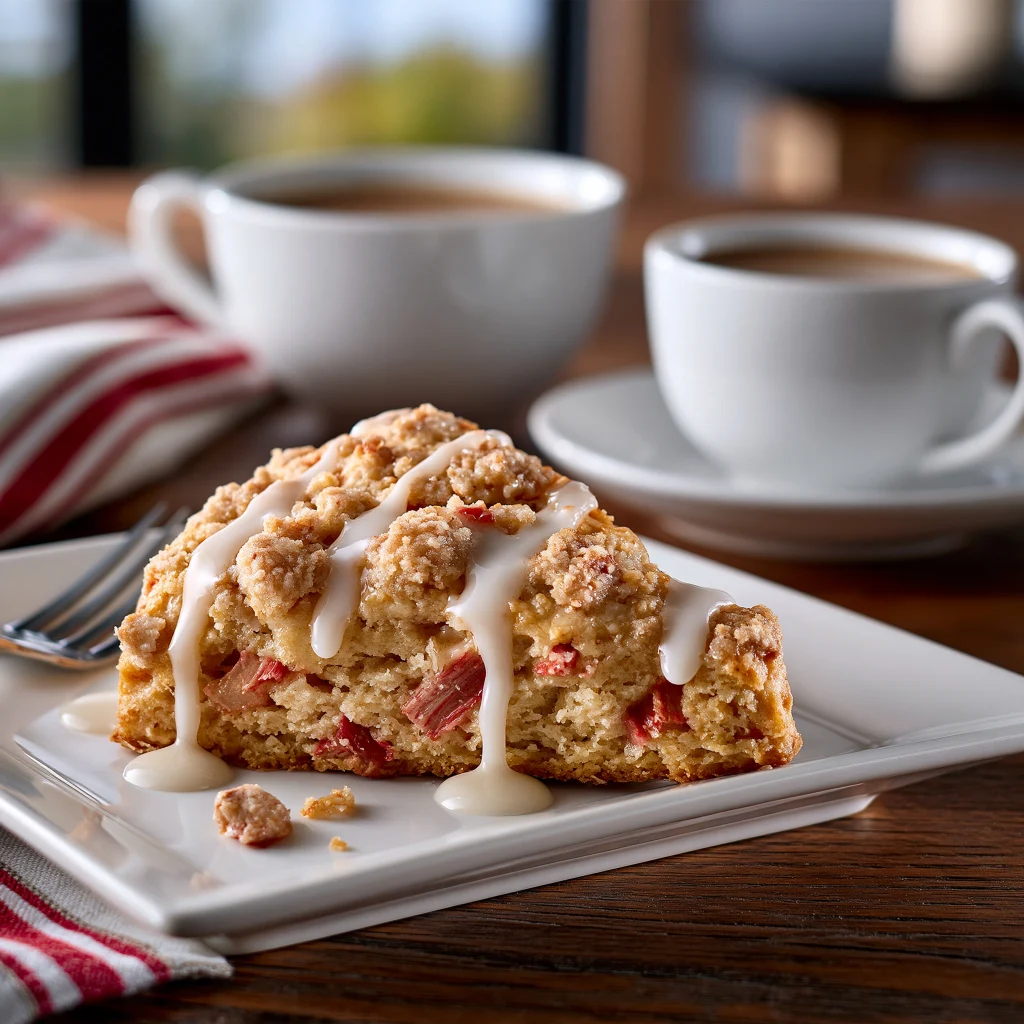
The process here is very friendly, even if homemade scones are not something you bake often. First, the dry ingredients are pulsed together in the food processor. Then the cold butter is added and pulsed until the mixture looks like coarse crumbs. That quick step saves time and gives you a very even start.
Once the mixture is in a bowl, stir in the buttermilk or half and half with the vanilla until the dough just begins to come together. It will look crumbly, and that is fine. A scone dough should not be overly wet. Fold in the chopped rhubarb gently so it stays in small pieces and does not break down too much.
Turn the dough onto a lightly floured surface and bring it together with your hands. A few gentle kneads are all you need. After that, pat it into shape and cut with a biscuit cutter or slice into squares for a more rustic look. If you enjoy breakfast bakes that feel right at home on a cozy table, the breakfast category is another good place to browse.
How to Freeze Rhubarb
Freezing rhubarb is a handy way to stretch the season a little longer. If you have extra stalks on hand, wash them, trim the ends, and chop them into small pieces. Spread the pieces on a baking sheet in a single layer and freeze until firm. After that, move them to a freezer-safe container or bag.
That first quick freeze helps keep the rhubarb pieces from clumping together. Then you can pull out just what you need for recipes like these rhubarb scones. For more guidance on freezing fruit, the University of Minnesota’s fruit freezing guide is a helpful reference.
If you bake with frozen rhubarb, there is no need to thaw it first. Just fold it into the dough straight from the freezer. That helps keep the moisture level a little more steady and keeps the rhubarb from going too soft before the scones are baked.
Baking Tips for the Best Texture
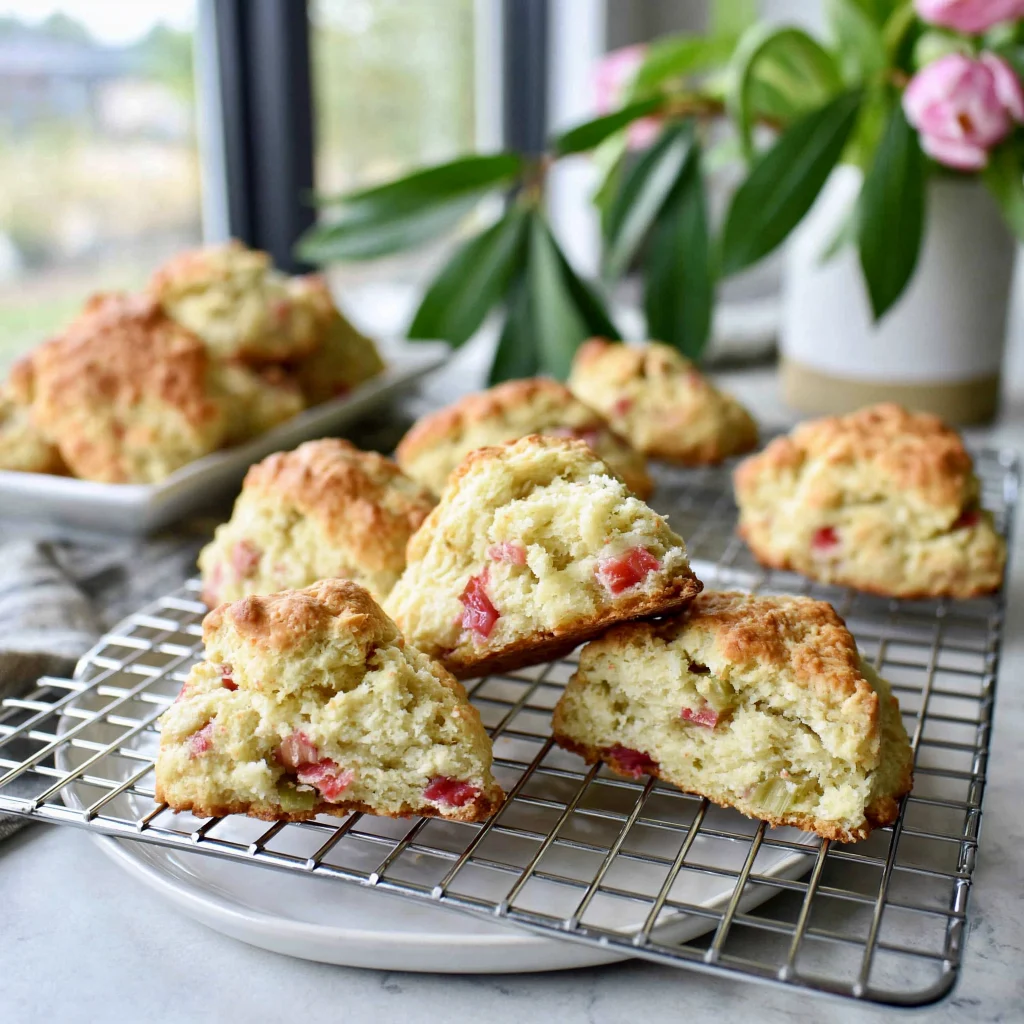
The biggest tip with rhubarb scones is not to overwork the dough. The dough should look a little rough, and that is exactly what you want. If you keep mixing until it looks perfectly smooth, the baked scones can turn heavy instead of tender.
A light hand matters when shaping too. Bring the dough together only until there are no large dry pockets of flour left. That small bit of restraint is what helps the finished scones stay soft inside. If you want a little extra reading on classic technique, King Arthur Baking’s scone guide is a nice match for this style of bake.
Keep an eye on the oven near the end of baking. These are ready when they are just starting to turn golden. Pulling them out at the right moment keeps them from drying out. Since every oven bakes a little differently, begin checking close to the 20-minute mark.
Ideas for Serving These Rhubarb Scones
These rhubarb scones are especially nice served warm, either plain or with a little butter. They also pair well with a spoonful of jam if you want a sweeter finish. Homemade cherry pie filling is one lovely option if you want something fruity on the side, and strawberry jam is a natural choice too.
For brunch, I like serving rhubarb scones with fresh fruit and something simple like yogurt on the side. They also fit beautifully on an afternoon tea tray with other small sweets and a pot of black tea or an herbal blend.
If you are baking for guests, you can cut the dough into neat rounds for a more traditional look, or keep things casual and cut them into squares. Either way, the flavor is what makes these stand out.
Storing Leftover Scones
These rhubarb scones are best the day they are baked, but leftovers still keep well for a short time. Store them in an airtight container at room temperature for up to two days. If you want to freshen them up, a few minutes in a low oven helps bring back some of that just-baked texture.
You can also freeze the baked scones once they are completely cool. Wrap them well and freeze, then warm them gently before serving. That makes this recipe a nice one for planning ahead during busy spring weekends.
Why This Recipe Is Worth Keeping
There are plenty of spring bakes that look pretty on the table, but the ones that get made again are usually the ones that are simple, dependable, and full of flavor. That is exactly where these rhubarb scones land. They make good use of fresh rhubarb without asking for complicated steps, and they feel equally right for a quiet morning at home or a table full of company.
The tart rhubarb, buttery dough, and tender crumb all work together in a way that feels familiar and seasonal. Once you make them once, there is a good chance these rhubarb scones will become one of those spring recipes you look forward to every year.
Rhubarb Scones
Make the most of rhubarb season with these delicate rhubarb scones. Perfect for spring brunch or afternoon tea.
Equipment
- Food processor
- Large mixing bowl
- Baking sheet
- Parchment paper
- 3-inch biscuit cutter
Ingredients
- 1 cup chopped rhubarb about 1-3 stalks, depending on size
- 1/2 cup granulated sugar
- 2 1/4 cups all purpose flour
- 1 Tbsp baking powder
- 1/2 tsp salt
- 1 tsp vanilla extract
- 8 Tbsp unsalted cold butter cut in pieces
- 1/2 cup cold buttermilk or half and half possibly a little bit more
Instructions
- Preheat oven to 375 degrees F. Line a baking sheet with parchment paper and set aside.
- Add the sugar, flour, baking powder, and salt to the bowl of a food processor and pulse to combine.
- Drop in the pieces of cold butter and pulse about 20-25 times until the mixture resembles coarse crumbs.
- Remove the mixture to a large mixing bowl and add in the buttermilk or half and half, and vanilla extract, and mix gently with a large spoon until the dough just comes together, it will be crumbly. If it is very dry, drizzle in a little more buttermilk or half and half. Gently fold in the chopped rhubarb.
- Turn the mixture onto a floured surface and knead a few times with floured hands until the dough is one piece, without a lot of dry flour left. Pat it out into a rectangular shape and use a 3-inch biscuit cutter to cut out the scones. You can also cut the dough into squares if you prefer.
- Arrange the scones 2 inches apart on the lined baking sheet and bake for about 20 minutes, until just starting to turn golden. Don’t over bake.